
برندینگ
What is a brand and what are the names of different brands?

a brand and what are the names of different brands: Branding It is also the process of forming these ideas and feelings. Seth Godin's purple cow is A brand that is truly innovative, distinctive, interesting and unforgettable.
a brand and what are the names of different brands: Branding It is also the process of forming these ideas and feelings. Seth Godin's purple cow is A brand that is truly innovative, distinctive, interesting and unforgettable.
No, don't worry; White forehead cow It does not have a negative or bad meaning. The white-fronted cow is just one popular and famous creature known for having a special feature. This feature also makes people talk about it, notice its distinction and always refer to it.
In other words, the same white forehead cow Mr. Seth Godin's purple cow is A brand that is truly innovative, distinctive, interesting and unforgettable. These features also make people interested in it, talk about it and consider themselves one of the fans of the brand; For this reason, brands sell more, have a higher price, and having them gives the consumer the feeling of winning and being different.
If you also want to own a powerful and special brand that people line up to own, don't miss this article. In the following, you with Brand principles We will introduce; But first let's see what is meant by brand?
What is a brand?
«brandIt is the sum of ideas and feelings that people have about a product or business.
Branding It is also the process of forming these ideas and feelings. In other words, the brand consists of small puzzles such as name, color, logo, mascot, slogan, promise, message and interactions. These puzzles create a special identity and tell a distinct story.
Beyond products, services and companies, brand It can be attributed to persons, cities, countries and anything that has its own unique and distinct spirit. A successful brand brings a lot of value to the company and creates a competitive advantage for it; That's why successful companies spend millions of dollars every year to build and strengthen their brand, including Branding on Instagram they invest; In other words:
"The brand is the key that opens the door to the mansion of market leadership and the highest income ceiling."
Brand is not limited to name, logo, product or price. The brand is the feeling that these elements create in the minds of the audience in a continuous and identifiable way. These feelings and imaginations can directly affect the buying behavior of customers and turn them into live and dynamic advertising boards of the brand.
To better understand the concept of a brand, let's see what a brand is not to fully understand What is the brand?!
The brand is the spiritual capital of the company, which affects the behavior of the audience
What is not a brand?
A brand is not just limited to a logo or brand name; Brand is actually an experience, feeling and connection that customers have with a company or product.
In other words, in response to the question of what a brand is, we can say:
- A brand is not just a logo or brand name: Brand includes all aspects of customer experience and is not limited to logo design and brand name selection.
- A brand is not just a specific product or service: Brand goes beyond the product or service itself and includes all aspects of the consumer experience, including service quality, customer interactions, and product presentation.
- Brand is not just advertising: While Advertising It can help to introduce and strengthen the brand, but the brand is more than advertising campaigns and its construction requires a continuous and real experience.
- The brand is not the price of the product or service: Brand relates to the value and experience that a product or service creates, and price alone cannot. Brand identity to show
- A brand is not the imagination of a particular person: The brand must be formed and maintained through the actual experience and interactions of the customers with the company. In fact, the brand is not only dependent on the CEO's claims or individual perceptions.
What is a brand and how is it different from a brand?
A brand is the name, sign or sign that is placed on the product or its packaging to help the audience distinguish the desired product from other similar products. The brand includes the product name, logo, graphic signs and even the color and design of the packaging, which attracts the customer's attention at first glance. Simply put, a brand is a visual and physical identifier that distinguishes your product from other products on the market.

Branding means winning and people always like to be supporters of winners
What are the advantages of having a brand?
Having a brand is like having railway lines between 2 cities; It may be difficult to build, but it makes reaching the destination easy and fast; Achieving any goal in business by having a brand and enjoying Brand story It is possible. In the following, we will examine some of the most important advantages of the brand:
- Distinction: A brand differentiates itself from its competitors.
- Trust: People trust brands more.
- Customer Loyalty: People remember brands and become their fans.
- Better pricing: Brands can charge a higher price for their product or service.
- Extensibility: Brands can launch their new products much more easily.
- Talent attraction and retention: Professionals prefer to work for brands.

A brand is like a delicious omelet made up of different elements
What are brand elements?
Each brand consists of 10 key elements, each of which, to create and maintain a brand, including design Digital marketing strategy Success is essential. These elements help you to define your brand correctly and convey its identity to the audience.
Next, to examine this Brand elements We will discuss and explain how they can help to strengthen the brand identity and create a sustainable and effective image of it.
1. Brand Positioning
Brand positioning is the first step in creating a comprehensive framework for the brand. This stage actually means determining the position of the brand in the minds of the audience, especially compared to competitors.
The brand positioning process includes defining the brand category and examining competitors to identify the brand's distinctive features. Effective positioning helps customers understand the brand better and have specific reasons to prefer and buy its products.
Brand positioning creates a clear insight into the needs and expectations of customers and helps to distinguish and perpetuate the brand.
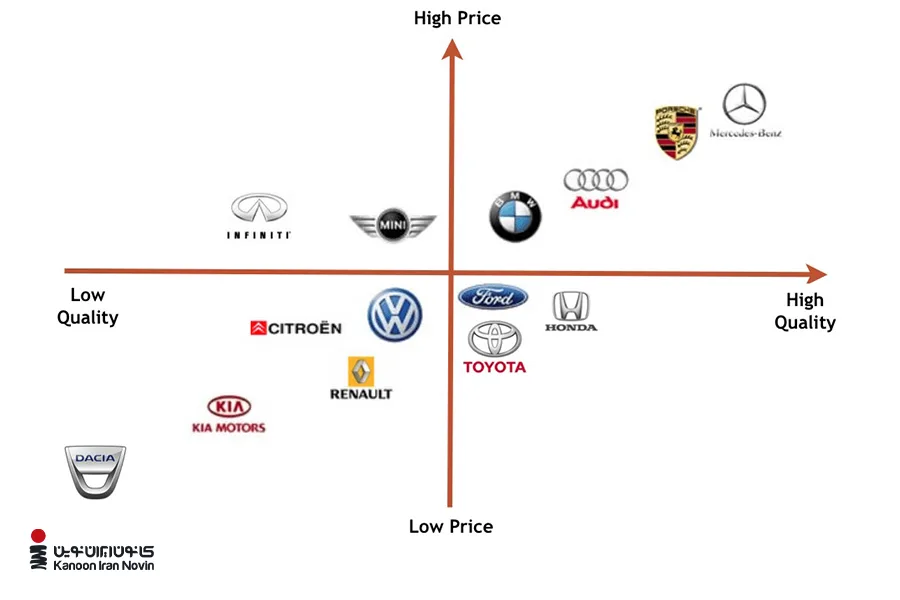
The chart of the position of famous automotive brands based on two factors: price and quality
2. Brand Architecture
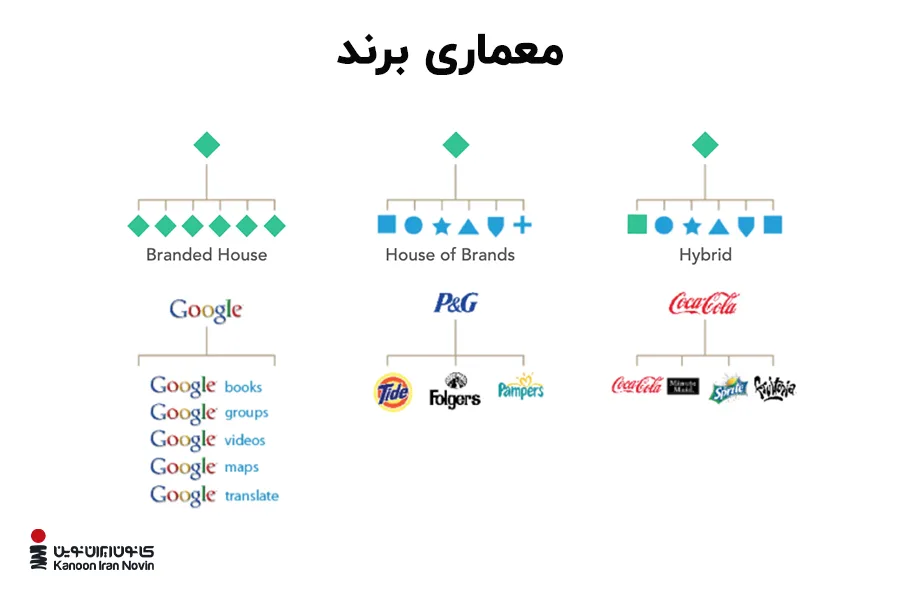
Brand architecture refers to the coordinated system of names, colors, symbols and visual language that defines the organizational structure of a brand or its sub-brands. Brand architecture It should be carefully designed based on customer experience research so that the main brand propositions are presented clearly and comprehensibly.
Types of brand architecture are usually defined in the following 3 categories:
- brandy house (Branded House): includes a main brand and several sub-brands that operate under the name and identity of the main brand.
- House of Brands (House of Brands): The main brand is separately related to the subcategory brands and the subcategory brands operate independently.
- Hybrid or combined brand architecture (Hybrid or Endorsing Brand): Subsidiary brands operate independently, but are still under the control and influence of the main brand.
These structures have helped to clarify the range of brand offers and the possibility of promoting it more effectively and on how the brand is perceived by customers in Advertising campaign They affect
3. Brand infrastructure (Brand Compass)
Brand infrastructure, also known as brand compass, shows what the brand's ultimate destination is and why it wants to achieve it.
These elements are a summary of the fundamental principles of the brand and define the direction of the business, the method of reaching the goal and the reason for the existence of the brand.
Brand infrastructure includes the following 4 parts:
- Brand purpose: The answer to the main question, "Why does the brand exist and continue to exist?"
- Brand Vision: The final state that the brand intends to reach.
- Brand Mission: The path your brand takes to achieve your vision. The mission consists of specific actions that the brand stands for Audience persona Purpose does.
- Brand values: Principles that are important to the brand and make up its behavioral culture.
4. Brand Archetype
Archetype or archetype is one of the brand elements developed based on the psychological theory of Carl Jung and helps brands understand their unique identity and personality and convey it to their audience. Jung believed that stories and myths play an important role in the formation of the collective unconscious of humans, and these myths are known as archetypes or archetypes.
Brands use these archetypes to create an emotional connection with their audience. Each archetype gives the brand a personality and a set of attributes that make the brand more memorable and recognizable.
Some of the brand's most famous archetypes include:
- Hero archetype (The Hero): Brands that seek to inspire and motivate people; Like Nike.
- The sage archetype (The Sage): Brands that seek knowledge and wisdom and teach others; Like Google.
- Outlaw archetype (The Outlaw): Brands that are interested in challenging the status quo and breaking the rules; Like Harley Davidson.
- Wizard archetype (The Magician): Brands that seek to create magical and transformative experiences for their customers; Like Disney.
To learn more about this field, we suggest that you read our article under the title "What is a brand archetype??' read the Reading this article will increase your knowledge of using archetypes in branding.
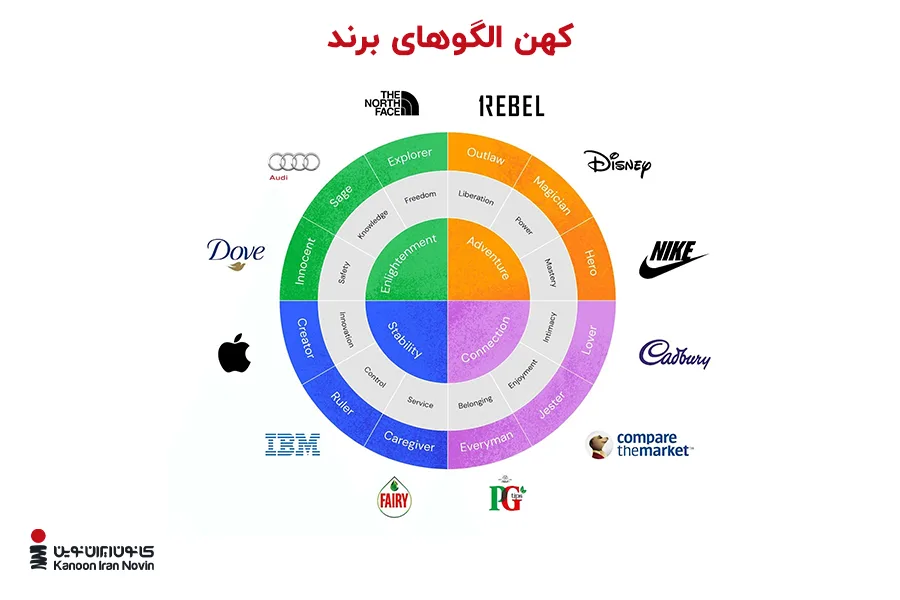
The brand archetype is the most important brand storytelling tool
5. Brand Personality
Brand personality It refers to a set of human traits and characteristics that are attributed to a brand. These features introduce the brand to the audience as a living and distinct entity.
Brand personality helps to create emotional connections with the audience and makes the brand more memorable and reliable. For example, the Red Bull brand is known for its bold, adventurous, energetic, athletic, and self-confident attributes.
Choosing the right brand personality and maintaining its continuity in all marketing and communication activities plays an important role in the success and positioning of the brand. Brand personality is determined and developed according to different methods.
For more information, definitely read the article Types of brand personality read the
6. Brand Promise
The brand promise is the commitment that the brand gives to its customers and is the foundation of their trust. For example, the Volvo car brand is known for its high safety features; Because this brand has fulfilled this promise for years. The brand promise can be conveyed through slogans, messages and advertisements and must be expressed explicitly or implicitly.
Pay attention to the fact that if the promise is expressed explicitly, it creates more expectations and people will be more strict about it; However, the most important thing is that the brand should always fulfill its promises and the promises should not remain as mere claims!
To get to know Types of digital marketing strategies click
7. Value Proposition
Brand value proposition is the main benefit of the brand to customers and shows how the brand's product or service meets the specific needs of the target audience. contrary to Advertising slogan To put it more bluntly, the value proposition directly states what customers will get from the brand.
Having a compelling and compelling value proposition that addresses customer needs, is clearly articulated, and is demonstrable is essential for brand alignment and impact.
8. Competitive advantage of the brand
Competitive advantage includes cases in which the brand has appeared or will be better than its competitors. To create a sustainable competitive advantage, several advantages should be considered; Because one-dimensional advantages such as "low price" or "fast delivery" cannot be consistently effective.
Using 3 unique advantages is an effective way to create a sustainable, credible and verifiable competitive advantage. To choose the competitive advantage of the brand, it is better to pay attention to the unique values, the needs of the customers and the weaknesses of the competitors. Also using co-branding This advantage can also be created at a higher speed.
9. Visual identity of the brand
Visual identity of the brand It includes a set of visual elements such as logo, colors, typography and photography techniques that make the brand recognizable and distinctive.
This identity should represent the purpose, character and position of the brand and visually convey the essence of the brand to the audience. The design and selection of these elements must be done based on detailed strategies in order to create a favorable effect on the way the brand is perceived.
10. Verbal identity of the brand
Verbal brand identity includes an integrated system of words such as name, slogan, tone, story and brand copywritings, which help to differentiate and identify the brand in different channels and contact points.
This identity will help to humanize the brand and create a reliable and familiar experience for the audience. Verbal identity should be strong enough that the audience can identify the brand easily; Just like the brand is their old friend.

In today's world, anyone can become a brand
What are the types of brands?
Not all brands are created equal. Some brands are designed to appeal to a wide audience, while others are designed for a specific and limited market. Some brands are known for their luxury and expensive features, while others are known for their affordable prices and economical value. Each brand has a unique identity, personality and purpose depending on the category it falls into. In the following, we examine the types of brands in different categories according to these special features.
Classification of brands based on price
One of the most common ways to categorize brands is to categorize them based on their relative price in the market. This category includes a wide range of brands; From luxury brands that offer high-end products at high prices, to budget brands that offer affordable products for a wide range of audiences.
1. Economy Brands
Economic brands offer products at reasonable prices to a wide range of audiences. These brands focus more on cost savings and easy access than luxury or exclusive features. These brands operate in various industries such as clothing, technology and food.
Examples: Walmart and McDonald's
2. Premium Brands
These brands offer their products at a higher price than their competitors and in return offer higher quality, unique design and a sense of exclusivity. The audience of these brands is usually people who are willing to pay more for a superior experience or product.
Examples: BMW, Chanel and Apple
3. Luxury Brands
Luxury brands offer the highest level of quality, craftsmanship and exclusivity. These brands are designed for an affluent audience and typically operate in industries such as fashion, jewelry, automobiles, and tourism.
Examples: Louis Vuitton, Rolls Royce, Hermès and Rolex
Categorize brands based on size or structure
In this section, brands are categorized based on their size and structure; such as personal, family and corporate brands. What distinguishes these types of brands from each other is the number of people or institutions that are involved in their formation and management.
4. Personal Brands
Personal brands are formed around a person's identity, personality and expertise. These brands are mostly seen in the areas of consulting, education, media and entrepreneurship, and their purpose is to build trust, show expertise and create direct communication with the audience. To learn more about this type of brand, we recommend an educational article Building a personal brand read the
Examples: Tony Robbins, Oprah Winfrey, Gary Vaynerchuk
5. Family Brands
These brands are owned and managed by family members and often emphasize family values, trust, tradition and continuity. Family brands may be small or very large and operate in different industries.
Examples: Mars (sweets and chocolates), Ford, Ben & Jerry's
6. Corporate Brands
Brands that represent an entire organization or company. These brands usually have different subcategories or products, but all fall under the umbrella of the main brand. Corporate brand identity and reputation have a direct impact on all of its activities.
Examples: Unilever, Procter & Gamble, Google
Categorizing brands based on audience or target market
Brands can also be categorized based on target audience; From niche brands that focus on a specific and limited group, to mass market brands that are designed to appeal to a wider audience. To learn more about this important topic in the field of marketing and branding, we recommend this article Knowing the target audience read the
7. Niche or specialized brands (Niche Brands)
Niche brands focus on a very specific and limited market. These brands are usually designed for a small group of people with special needs or interests and focus on quality, exclusivity and perfect fit.
Examples: Aesop (minimal cosmetics), Leica (professional camera), Rapha (cycling clothing)
8. Mass Market Brands
These brands are designed to attract a wide audience. Their goal is to provide products that are accessible, affordable and familiar to the majority of people. They usually invest in extensive advertising and broadcasting.
Examples: Coca-Cola, Nike, Samsung
9. Local or Regional Brands
Brands that operate in a specific region and are in harmony with the cultural, economic or linguistic characteristics of that region. These brands may later grow and enter wider markets.
Examples: Local food or clothing brands of each country, such as Dogh Abali in Iran or Akbar Chicken food brand
10. Global Brands
Brands that are internationally known and operate in several countries. These brands have a transnational identity and usually localize their marketing messages for each culture.
Examples: McDonald's, Apple, Toyota
Classification of brands based on physical presence
Physical brands are brands that focus on tangible products or experiences. These brands rely heavily on the appearance of their products, packaging, and physical space to create a lasting impression on customers. Examples of physical brands include brands active in fashion, food and beverage, and hospitality industry.
11. Product Brands
These types of brands are focused on a specific product. Their focus is on the quality, design, packaging and differentiation of that product from other competitors. A product brand may be part of a larger company but develop an independent identity for itself. Product brands are typically the result of extensive market research and innovation to address a specific need from a target audience. purpose of Digital branding can also be considered the same issue.
Examples: Tide (detergent from P&G), KitKat (from Nestlé), iPhone (from Apple)
12. Private Label Brands
There are brands that are marketed by a particular company or store, but their products are usually made by other manufacturers. These brands often have lower prices and are known as store brands. For example, in Iran, Badran company started to offer its own private brands, which were generally produced in other companies, by setting up network marketing.
International examples: Kirkland (at Costco), Great Value (at Walmart)
13. Retail Brands
These brands represent retail chain stores that offer different products under their own brand. Their focus is on the shopping experience, price and ease of access for customers.
Examples: Zara and H&M
14. Event Brands
Brands that are related to a specific event and whose identity is formed around that occasion or ceremony. These events may be temporary, annual or seasonal. An event brand is usually focused on experience, socialization and excitement.
Examples: The Olympic Games, the Oscars and the FIFA World Cup
Category of digital brands
Online brands have become an important and influential part of the market in today's digital world. These brands operate entirely through online channels and often have no physical stores. With the growth of e-commerce and social networks, online brands have been able to reach a wide range of audiences and build a loyal community of customers.
Some successful examples of online brands are: Digikala, Snap and Instagram. By intelligently using the Internet, these brands have created unique experiences and established innovative communication with their audiences.
15. Software service brands (SaaS Brands)
These brands offer subscription or online software services. Their key features are flexibility, constant updates and a subscription-based revenue model.
Examples: Notion and Canva
16. Ecommerce Brands
Brands that sell their products or services entirely through online stores. Their advantage is the elimination of middlemen, offering a more reasonable price and global access.
Examples: Digikala and Amazon
Categorize brands based on idea or mission
The success of a brand in many cases depends on the idea or philosophy behind it. In this section, we will examine the types of brands that were formed based on a unique idea, belief or worldview, and this feature has distinguished them from other brands.
17. Disruptive Brands
These brands are created with the aim of breaking traditional patterns and creating transformation in their industry. They usually change the structure of the market by using innovation, technology and different thinking.
Examples: Tesla (in the automotive industry), Netflix (in the entertainment industry), Uber (in transportation)
18. Sustainable Brands
Brands whose priority is protecting the environment, reducing carbon footprint, using renewable resources and responsible production. Instead of mere consumerism, these brands pay attention to the future and the preservation of natural resources.
Examples: Patagonia, The Body Shop, Veja
19. Ethical Brands
These brands operate on the basis of transparency, social justice, fair trade, respecting workers' rights and ethical production. Sometimes they overlap with sustainable brands, but their main focus is on social responsibility.
Examples: TOMS (with the model "one purchase, one donation"), Ben & Jerry's, Everlane
20. Non-Profit Brands
These brands do not operate with the goal of financial gain, but their mission is to create social, cultural or human change. Their income is used to implement public benefit or charity projects.
Examples: WWF (World Wildlife Fund), Greenpeace, Doctors Without Borders
21. Political Brands
This category includes brands that represent parties, movements, campaigns or specific political views. The identity of these brands is tied to values, promises and political attitudes.
Examples: The American Democratic Party, the MeToo movement, the election campaigns of political figures
Public sector brands
Public sector brands are brands that operate under the ownership and management of the government or government institutions. These brands are usually associated with services or products provided by the government; Such as public transportation, health, treatment and education.
The main goal of these brands is to provide access to citizens' basic needs and improve their quality of life. These types of brands can be seen as a continuation of the role and responsibilities of the government, because their budget is usually provided through public taxes.
22. Government Body Brands
These brands represent institutions, organizations or public services affiliated with the government. They are usually formed with the purpose of informing, providing public services or creating an official image of the government.
Examples: NHS, IRS, municipalities
23. Geographic Brands
Brands that represent the identity of a place, city, country or region. They are usually used to attract tourists, investors or increase global credibility.
Examples: Lovely Tehran, Only Lyon and I ❤ NY
Other special categories of brands
Some other types of brand cannot be placed in a specific category. We introduce this category of brands below.
24. Cult Brands
These brands go beyond customer loyalty; They have fanatical and loyal fans who consider the brand a part of their identity. This strong emotional connection makes fans actively defend and promote the brand.
Examples: Harley-Davidson, Apple, LEGO
25. Sub-Brands
Sub-brands are brands that operate under the umbrella of a parent brand. They usually have their own distinct identity but still benefit from the power and credibility of the original brand. The purpose of the sub-brand can be to reach a new market or respond to a different need.
Examples: Diet Coke (subsidiary of Coca-Cola), Lexus (subsidiary of Toyota), iPad (subsidiary of Apple)
26. Designer Brands
These brands are founded by famous designers or known by their names. They are usually active in the fashion industry, interior decoration or industrial design and focus on specific aesthetics, creativity and style.
Examples: Giorgio Armani, Vera Wang, Tom Ford, Philippe Starck
27. Sport Team Brands
Brands that belong to professional sports teams or clubs. They convey cultural identity, sense of belonging, pride and competition. The team brand is very powerful not only for fans, but also in the media and peripheral goods market.
Examples: FC Barcelona, New York Yankees, Manchester United, LA Lakers
28. Employer Brands
This type of brand is not made for the customer, but for the employees and human forces. The purpose of employer branding is to present a company as an attractive and valuable place to work and attract top talent.
Examples: Google (as a dream workplace), Salesforce, LinkedIn
29. Character Brands
These brands are fictional characters that usually appear in movies, animations or games, but beyond that they become cultural and economic symbols. They are used to produce by-products, branded goods or even cultural messages.
Examples: Mickey Mouse, Harry Potter, Pikachu

Branding means differentiating from repetitions and telling a story that others will listen to
What makes your brand special?
As we said, in order to build a special and distinctive brand, you must become Mr. Seth Godin's purple cow or our own white forehead cow. First of all, ask yourself why you are not a brand and others do not know your product or service? After that, you should know what characteristics you would like your brand to be known for and how you want to make your target audience feel? Who is the target audience of your brand? The answers to these questions can give you good clues.
On the other hand, you should pay attention to the fact that a particular brand is not afraid of differentiation and displays its characteristics very clearly. This brand allows the audience to understand its identity and have a specific direction towards this identity. This brand is not even afraid of not being a fan among a certain part of the audience; Because he knows exactly what direction he has and who should support him. Precisely for this reason, successful and special brands have a higher specific value and get a larger share of the market.
In the following, we examine 8 common features between special and powerful brands:
1. Focus on the target audience
Successful brands know their target audience well and know about their inner desires. These brands with Knowing the target audience They can give them the right suggestions; Suggestions that directly affect the lives of the audience and meet their needs.
For example, the Oatly brand (a Swedish food company that produces oat-based dairy alternatives, including oat milk) is a prime example of this. The audience of this brand has the following characteristics:
- They care about environmental and ethical issues and look for products that match their values.
- They belong to a certain class of society.
- For them, what they choose and eat is very important and they do not go for any product.
- They have specific views and opinions.
On the other hand, the Oatly brand has been able to attract the attention of these audiences by offering plant-based products, commitment to environmental and ethical values, and having a bold and distinctive personality. The brand communicates with its audience in a transparent, creative and bold way and shows them how much it cares about their beliefs.
2. Clear positioning
Special and successful brands differentiate themselves from competitors by creating a special place in the market. These brands prefer to be the uncontested ruler of a certain part of the market rather than to get a small share in the whole market but have no firm position.
The best example for this is the difference between Volvo and Audi. The Volvo brand always emphasizes the safety and reliability of its products. This brand's commitment to safety has made its products the first choice of families. On the other hand, Audi maneuvers on the innovative design and high performance of its products. This brand attracts completely different audiences by offering advanced and stylish cars.
3. Specific mission and values
Strong brands always go beyond their products and services. These brands have specific mission and values for themselves and move in the direction of these principles. A clear mission statement gives brands a clear purpose and direction, making it worth much more than a typical manufacturer or service provider. It is the same mission and values that make customers, employees and stakeholders of the brand establish a deeper relationship with it; Because they all have common beliefs and their relationship is more based on values than money.
The best example of this is the famous Patagonia brand. This brand, which operates in the field of sports equipment and clothing, has defined its mission as follows:
"Producing the best products, preventing unnecessary damage to nature and providing effective solutions to prevent damage to the environment"
This clear statement and action has made Patagonia a popular brand for people who care about the future of the planet. In this way, Patagonia is not just an ordinary manufacturer of sports equipment and has become a hero; This makes Patagonia a special and powerful brand.
4. Appropriate brand name
Choosing the right name for your brand is as important as choosing the right name for your child. But what exactly do we mean by the right name?
A well-chosen name is related to the brand's identity, the target audience can relate to it, it is compatible with the industry in which the brand operates, it is easy to remember and it has the ability to remain in the audience's mind.
In addition to all these, the brand name should be flexible enough not to limit the growth and development of the brand in the future. For example, the Puma brand has no limits to develop and add new products, but the American socks brand (Happy Socks) is forced to sell only socks forever.
5. Distinct visual identity
Psychologists believe that our mind relies on previous judgments to measure the performance of a person, company or brand; This phenomenon is called halo effect in psychology. This means that if your visual identity design is impeccable and professional, your brand's offerings and services will also be evaluated with the same quality. Therefore, you should not be too simplistic in choosing the logo, colors, fonts, packaging and any other visual elements of the brand. Each of these elements can affect the audience's judgment about your brand.
This is especially important in today's market where the final quality of products is very close to each other. For example, how can two tomato sauces, with the same formulation and the same taste, be different from each other? In this situation, the sauce that places more value on its visual identity design and packaging will appear more high-quality in the minds of customers.
6. Distinct verbal identity
Strong and unique brands value communication with their audience. These brands know that words play an important role in this communication and therefore follow a unified and coherent verbal identity. This verbal identity helps the brand to establish a closer relationship with the audience in different situations and to be imagined with a human character in their minds. It's not wrong to say that if your brand can create a human persona in the subconscious of your audience, it has achieved unimaginable power.
For example, the Chitose brand uses a friendly, happy and humorous tone in all its advertisements and media. This tone makes the character of the Chitose brand to be formed in people's minds like a funny and energetic friend; A friend who is pleasant to be with in moments of leisure and fun. This identity is completely compatible with Chitooz product and has the same sound.
7. Having a powerful story
From the beginning of history until today, nothing has been able to bring people closer together like a story. Stories are a bridge to understand others and these stories also cause identification. For this reason, brands that have a story to tell are always more attractive to the audience.
Brand story It makes the audience feel one with that brand, consider themselves a member of that story and identify with that brand at different times. To tell the story of the brand, you must have a goal, strive to achieve that goal, and overcome the challenges on the way to achieving that goal; In this way, you have an attractive story for your brand.
8. Exceptional brand experience
Strong brands know that nothing is more important than connecting with their audience. For this reason, they always try to create positive and memorable experiences for their audience. They appreciate every opportunity to interact with their audience and make a lasting impression. Therefore, they always try to make the audience have a good experience with the brand. These positive experiences can be created for customers through events, during sales or service delivery, and through brand communication channels.
For example, Tapsi and Snap brands are very active in this field. They republish the good and special experiences of their customers on social networks to create a better image of their brand in the minds of the audience. The more effective this experience is, the more effective it is viral ad it works In such a situation, people themselves talk about the brand and create credibility for it.

Brand is an identity that you create in the mind of the audience using different tools
Build a brand that others will talk about!
Jeff Bezos, the founder of Amazon, says about the brand:
.Your brand is what other people say about you when you’re not in the room
Brand is the result of other people's perceptions and opinions about your business; When you are not present or advertising. This has a direct connection between the product or service and the story your brand tells.
If you also want to have a brand that people talk about, you've come to the right place! in Advertising center Iran Novin, we are with you to build a powerful brand and benefit from its benefits. enough to receive Branding services contact us
final word; From understanding the brand concept to building a brand
In this article from Branding magazine and the marketing center of Novin Iran, we talked with you about what the brand is. These days, brand and branding has become a metaphor for business circles and wealth creation, but many are still unaware of its true meaning!
Therefore, in this article, we tried to give a clear, convincing and comprehensive answer to the question What is the brand? and by examining the benefits of the brand and its main parameters, reach a common understanding about this important element of marketing. To learn more about this topic, we recommend this article Branding strategy training read the
In today's world, being a white-fronted cow, or in the words of Seth Godin: purple cow Being is not bad; Rather, it is necessary to attract the attention of others and build a stable position in the market! For this, no weapon like brand can be effective; Nothing good and great in our world has come into being without making distinctions; So, if you also want greatness and growth, start thinking about building a brand now; Brand in its true meaning!
Frequently asked questions
What are the types of product brands?
Types of product brands include the following: 1. Consumer Brand: Brands whose products are sold directly to consumers, such as food brands (Nestlé) or clothing brands (Nike). 2. Industrial Brand: Brands that market their products or services to other businesses, such as Siemens or Caterpillar. 3. Luxury Brand: These brands offer special and expensive products or services, such as Chanel or Rolex. 4. Digital Brand: Brands that have established their identity mainly online, such as Amazon or Netflix. 5. Service Brand: Brands that provide services instead of physical products, such as Uber or Airbnb. 6. Regional or local brand (Local Brand): Brands that are popular in a specific geographic area, such as local brands in different countries. 7. National Brand: Brands that are known at the level of a country, such as Iranian domestic products such as Kale or Hakopian. 8. Global Brand: Brands that are known internationally, such as Coca-Cola or Apple.
What does brand mean?
Brand is a concept that includes all the characteristics, feelings and perceptions that the audience has about a product, service or company. Brand not only includes name, logo and visual design, but also includes experiences, values and emotional connections between company and customers. In other words, the brand is the general understanding that the audience has of a business in their minds, and this understanding can be positive, negative or neutral.
What is the concept of brand?
The brand concept is a set of elements that define the identity of a product, service or organization and differentiate it from competitors. These elements include: 1. Visual identity: logo, colors, design. 2. Slogan and message: the main values of the brand that are expressed in the form of advertising messages or slogans. 3. Customer experience: the feeling the customer gets when interacting with the brand. Values and Missions: The beliefs and goals that the brand adheres to.
Who owns the brand?
A brand owner is someone who has full control or legal and financial ownership of a brand. This property can include a brand name, logo, related products or services. The brand owner can be an individual, a company or a group. Generally, a brand owner is someone who: 1. Oversees marketing and branding strategies. 2. Legally has the right to use or manage the brand. 3. He is responsible for protecting the credibility and value of the brand in the market.
What is a brand?
Brand (which is often used synonymously with brand) is a term that helps identify a specific product or service through a name, design, or symbol. A brand is more than a brand, as it includes values, experiences and emotional connections with customers in addition to physical aspects. In simple words, a brand is only a symbol or name of a product, but a brand is its overall identity in the mind of the audience.
What makes a brand last?
1. Continuous communication with the needs and values of the audience 2. The ability to adapt to market changes 3. Innovation in products and services 4. Maintaining quality and stability over time
Why is branding essential for businesses?
Branding helps businesses to: 1. Be known. 2. Stand out from competitors. 3. Attract loyal customers. 4. Create added value. 5. Remain stable in the market.
How to build a successful brand?
1. Defining the identity and specific values 2. Designing a professional visual identity 3. Accurately knowing the target audience 4. Providing a unique customer experience 5. Continuous and strategic communication with the audience 6. Adhering to stability and quality
What is the definition of brand in simple language?
A brand is a unique identity that distinguishes a product, service or company from competitors. This identity includes elements such as name, logo, design and message that creates a special and lasting image in the mind of the consumer. A brand represents the values, vision and personality of a business and directly affects the opinions and loyalty of customers. In simpler terms, a brand is a set of unique features of a product or service that gives it a distinct identity in the market. For example, the Nike brand is known for its famous tick logo and the influential slogan Just Do It. This combination conveys the feeling of being athletic and motivated and differentiates Nike products from other sportswear brands. It also creates an emotional connection with consumers who identify with these values and messages.
What is meant by brand?
A brand is a set of feelings, ideas, experiences and expectations formed in the mind of the audience towards a product, service or company. A brand is more than a business name or logo; In fact, it shapes the personality and identity of your business in the eyes of customers and determines your position and value in the market.



دیدگاهها
0هنوز دیدگاهی ثبت نشده است.